


English

Home > Ways to earn money > How to Earn Money by Teaching Online: The 2026 Blueprint for Educators and Creators
 Manpreet Singh
Share: 



The era of just logging onto a platform, speaking generic English to a webcam, and automatically making ₹3000 an hour is over. The online teaching landscape in 2026 is highly fragmented, incredibly lucrative for specialists, and punishing for generalists.
Whether you are a college student looking for beer money, a former school teacher fleeing burnout, or an industry expert wanting to monetize your knowledge, the internet remains the most accessible vehicle for educational income. But to succeed today, you must understand the difference between trading your time for money (tutoring) and building a digital asset (course creation).
Here is the definitive, no-nonsense guide to earning a living by teaching online, including exactly what platforms are dominating in 2026, realistic income timelines, and the hidden costs nobody talks about.
How much can you earn by teaching online?
An online teacher’s income depends entirely on their delivery model. Live online tutors typically earn between ₹1200 and ₹2500 per hour on marketplace platforms, with specialized tutors (e.g., advanced coding or SAT prep) charging ₹4000 to ₹8000+ per hour. Alternatively, asynchronous course creators can earn anywhere from ₹0 to over ₹1,000,000 per month in passive income, though it requires significant upfront marketing and audience building.
Before you buy a ring light and a webcam, you must choose your business model. There are two entirely different ways to earn by teaching online, and they require completely different skill sets.
This is the traditional “time-for-money” model. You meet with a student or a small group on Zoom, Preply, or ClassIn, and you teach them in real time.
This is the “creator economy” model. You pre-record lessons, package them with worksheets or community access, and sell them repeatedly on platforms like Graphy, Teachable, or Skool.
If you want immediate cash flow, marketplace platforms are your best starting point. They take a percentage of your earnings, but in exchange, they handle the marketing, scheduling, and payment processing.
The ESL (English as a Second Language) market is still massive, but it has shifted toward conversational practice for adults rather than just flashcards for kids.
If you teach math, chemistry, guitar, or Python, platforms like Wiingy and SuperProf connect you with students seeking specific skill acquisition.
| Platform | Best For | Degree Required? | Pay Rate | Platform Fee/Commission |
| Cambly | Casual English conversation | No | ~₹1020/hr | None (Fixed pay) |
| Preply | Languages & academic subjects | No | You set (₹1500-₹2500 avg) | 18% – 33% |
| Wiingy | STEM, coding, test prep | Preferred | Varies by subject | Undisclosed/Tiered |
| SuperProf | Local & online niche skills | No | You set (₹2000-₹5000+ avg) | 0% (Student pays fee) |
If you are transitioning from tutoring to course creation, you need software to host your videos, process payments, and manage your student community.
Generic courses like “How to speak English” or “Intro to Excel” are dead. They have been entirely commoditized by AI and free YouTube videos. To charge premium prices today, your teaching must solve a specific, painful problem for a highly targeted demographic.
High-Demand Teaching Niches:
A major advantage of teaching online is the low overhead. However, poor audio and video quality will instantly destroy your credibility and limit your earning potential. Here is the realistic gear breakdown.
| Gear Category | The “Scrappy” Setup (Free/Cheap) | The “Pro” Setup (Recommended) |
| Camera | Built-in laptop webcam (₹0) | Logitech Brio 4K or Elgato Facecam (₹13,000 – ₹15,000) |
| Microphone | Cheap gaming headset (₹2000) | Samson Q2U or Shure MV7 USB (₹7000 – ₹25,000) |
| Lighting | A sunny window (₹0) | Elgato Key Light or generic ring light (₹4000 – ₹15,000) |
| Internet | Standard home WiFi | Hardwired Ethernet + 100Mbps+ speeds (₹1000 – ₹2000 for cable) |
| Software | Zoom Free, Google Meet (₹0) | ClassIn, Zoom Pro, or VEDAMO (₹1500 – ₹3000/mo) |
Industry Secret: If you only upgrade one thing, upgrade your microphone. Students will forgive a slightly grainy webcam; they will immediately refund a course or cancel a tutor if the audio echoes or sounds like it was recorded in a tin can.
If you are starting from zero today, follow this exact workflow to avoid the “empty calendar” syndrome.
No. While some traditional ESL platforms (like VIPKid in the past) and corporate tutoring companies require a Bachelor’s degree, massive marketplaces like Preply, Cambly, and SuperProf do not. Your skill, portfolio, and student reviews matter more than formal credentials.
It is highly recommended but not strictly mandatory for all platforms. A 120-hour TEFL certificate (which can be obtained online for under ₹5000) will unlock higher-paying platforms and make your profile stand out to potential students.
General topics are saturated, but specialized knowledge is not. There is a massive surplus of generic conversational English tutors, but a severe shortage of tutors who can teach advanced software, specialized business communication, or high-level STEM test prep.
Marketplace fees range wildly. Cambly pays a flat rate (no commission taken from you), while Preply takes 100% of your first lesson with a new student and 18-33% of subsequent lessons. Course platforms like Udemy can take up to 63% of organic sales, whereas SaaS platforms like Teachable or Skool charge a flat monthly fee (₹3900-₹9900) and 0-5% per transaction.
Most international teaching platforms pay via PayPal, Payoneer, Wise (TransferWise), or direct bank transfer (Stripe). Ensure you factor in the 2-3% currency conversion or withdrawal fees these payment processors charge.
Technically yes, on apps like Cambly or PalFish. Practically, no. To be a professional who commands high rates, you need a desktop or laptop to share screens, utilize interactive whiteboards, and manage courseware seamlessly.
For independent 1-on-1 tutoring, Zoom remains the most reliable due to its stability and screen-sharing tools. If you are building a structured tutoring company, specialized education software like ClassIn or VEDAMO provides better interactive whiteboards, student tracking, and gamification tools.
As an online teacher, you are generally classified as an independent contractor or freelancer (e.g., a 1099 worker in the US). Platforms will not withhold taxes for you. You are responsible for tracking your own income, deducting business expenses (like your internet bill and webcam), and paying self-employment taxes. Always consult a local tax professional.
Relying entirely on one platform. If you build your entire income on a single marketplace, an algorithm change or policy update can wipe out your business overnight. Always be migrating your top students off-platform (if terms of service allow) or building an independent audience via social media or an email list.
Written by Manpreet Singh
An Internet wealth architect from India, a true master of turning clicks into gold. He possesses the innate ability to transform complex online models into actionable blueprints for everyday people, specializing in internet monetization, affiliate marketing, and mobile app revenue streams. Through his “low barrier to entry, high compounding returns” practical strategies, he has successfully guided thousands of global followers to convert their skills and passions into substantial online income.
Watch Video and Earn Money App India: Daily Yields, Rules & Fast UPI Transfers (2026)
For smartphone users searching for a reliable earn money app and video platform in India, task aggregators like Taurus have changed how micro-earnings work.
Manpreet Singh
Earn Real Cash on Teen Patti Master via Taurus App
If you are looking for a reliable way to win real money playing mobile games, Teen Patti Master is currently one of the most popular skill-based card games in India.
Manpreet Singh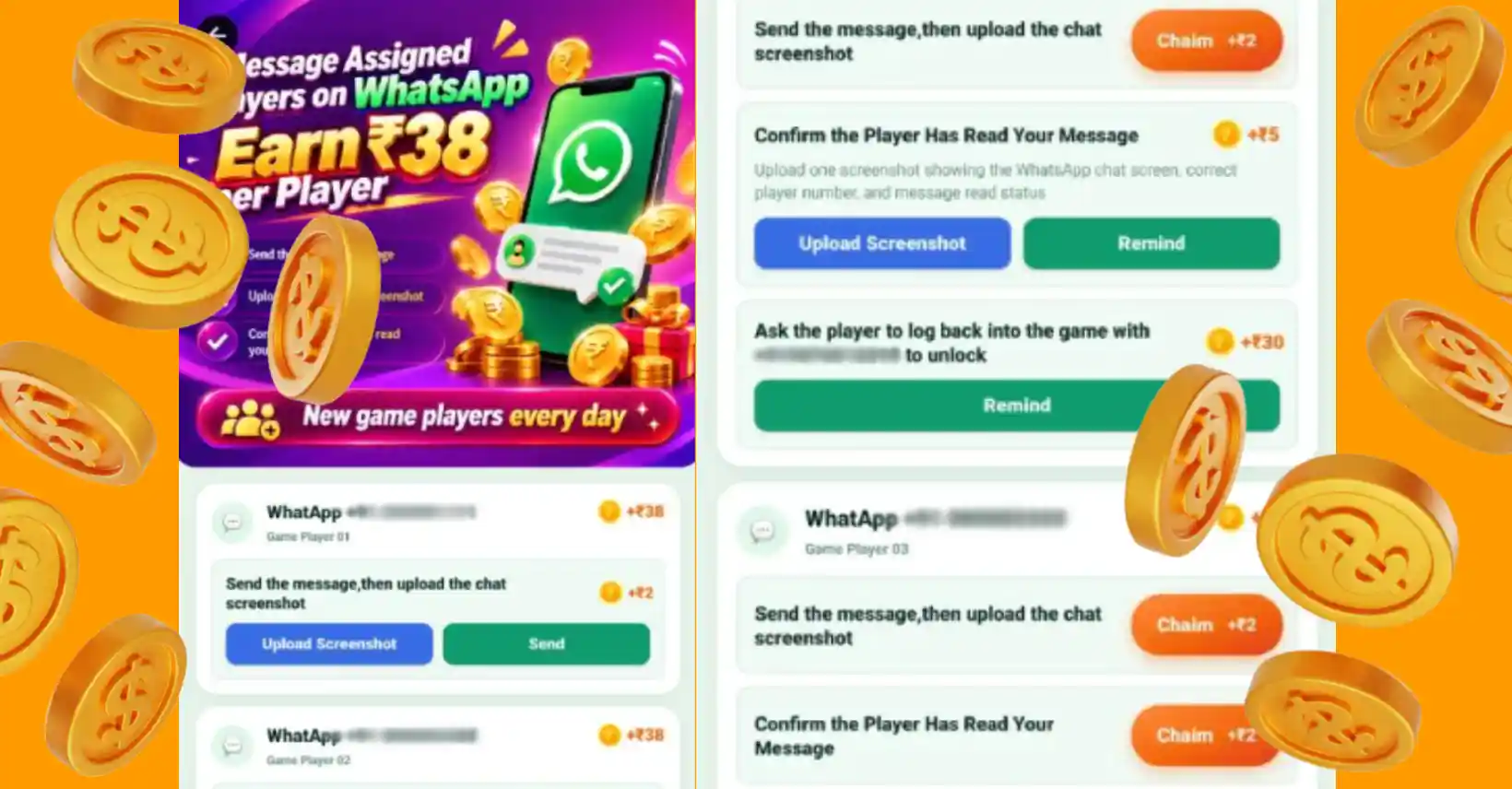
Taurus App WhatsApp Task Guide (2026): Earn Up to ₹38 Per Player & Maximize Daily Payouts
If you are looking to scale your daily income using the Taurus App in 2026, the newly updated WhatsApp Task Feature offers one of the most lucrative ways to earn money from home without upfront investment.
Manpreet SinghTable of contents:


Discover diverse earning methods on Taurus Cash APK, a mobile app offering tasks, skill-based games, and refer & earn programs. Join for a seamless income by completing daily tasks & earning commissions!




Businesse cooperation: [email protected]

 How to Earn